
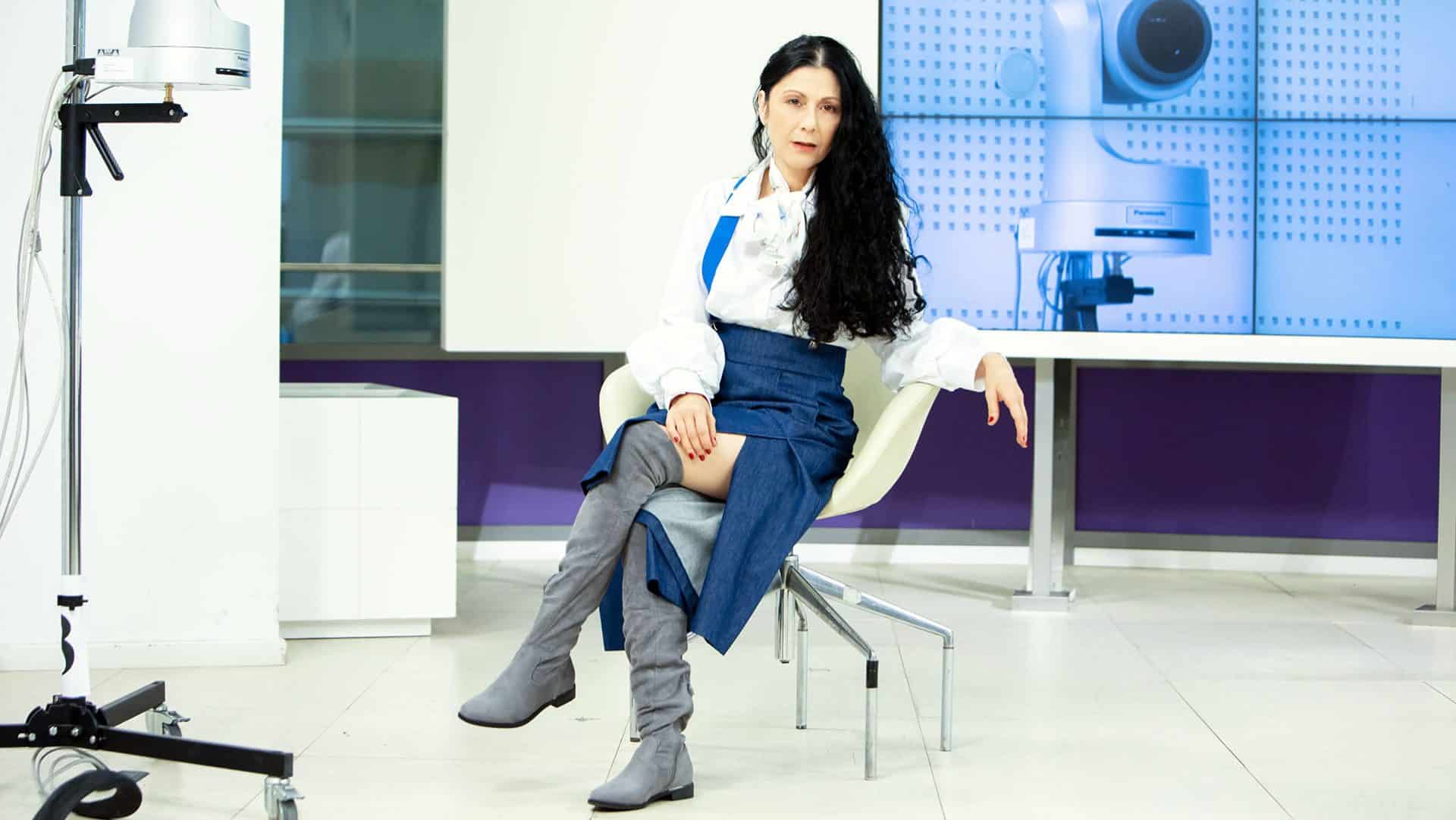
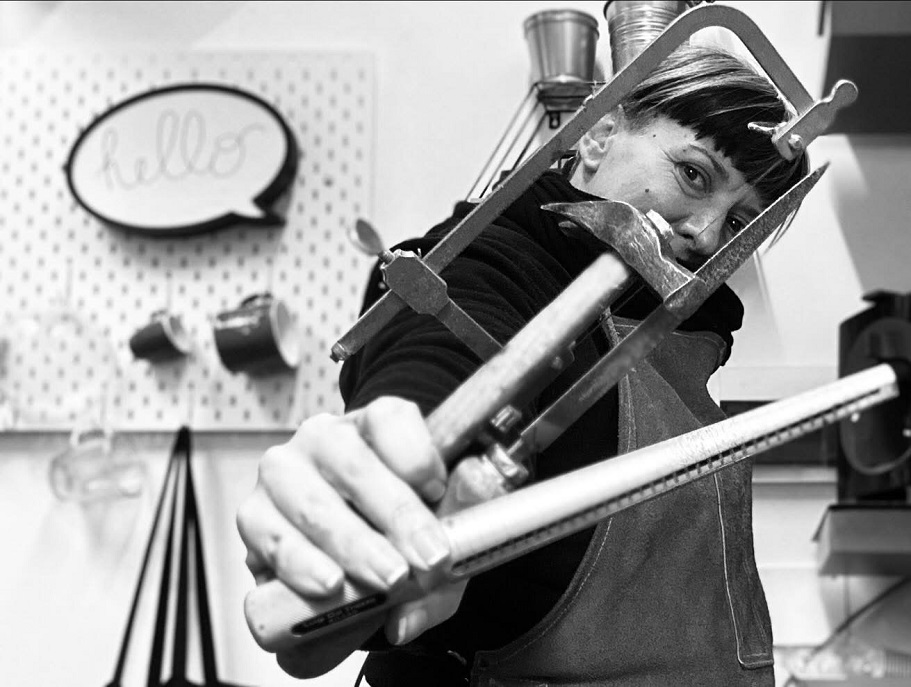
Fabiana Fusco creates jewelry the way others write poetry, instinctively, honestly, and with a deep sense of responsibility toward the world around her. For her, jewelry is never just an object, but a form of expression, a statement, sometimes even a quiet act of resistance.
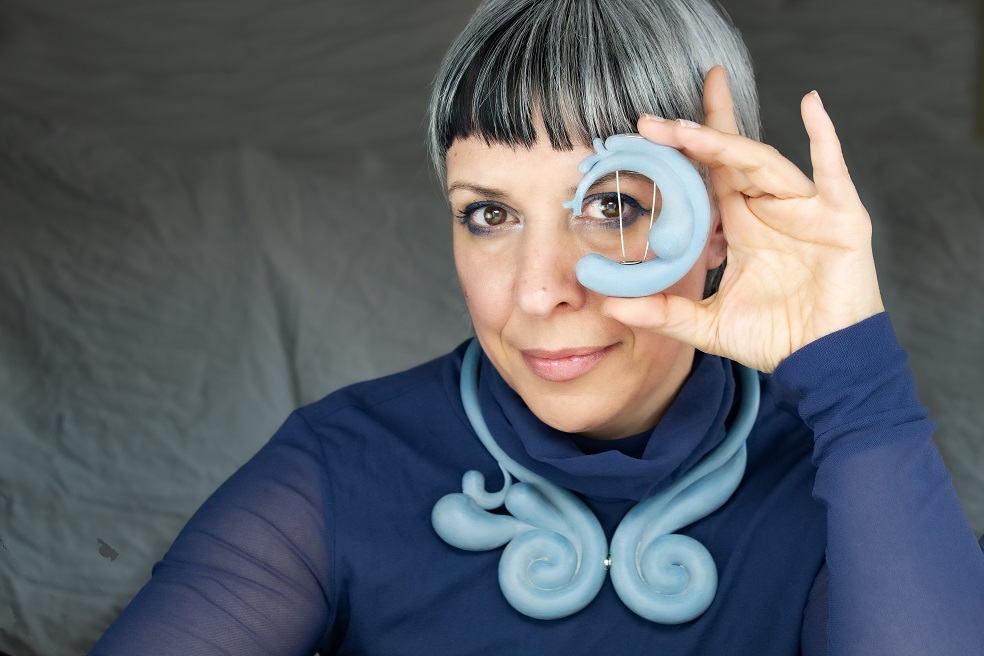
I first met Fabiana in April 2025, at AUTOR, the only contemporary jewelry fair in South-Eastern Europe, founded by Dan Pierșinaru and held in Bucharest. From the very beginning, she felt like a Mediterranean summer: warm, luminous, generous, full of energy and color.
Her jewelry has a special kind of magnetism. In an exhibition space filled with hundreds of pieces, where the eye hardly knows where to rest, Fabiana’s creations make you pause. They draw you in slowly, inviting reflection rather than demanding attention.
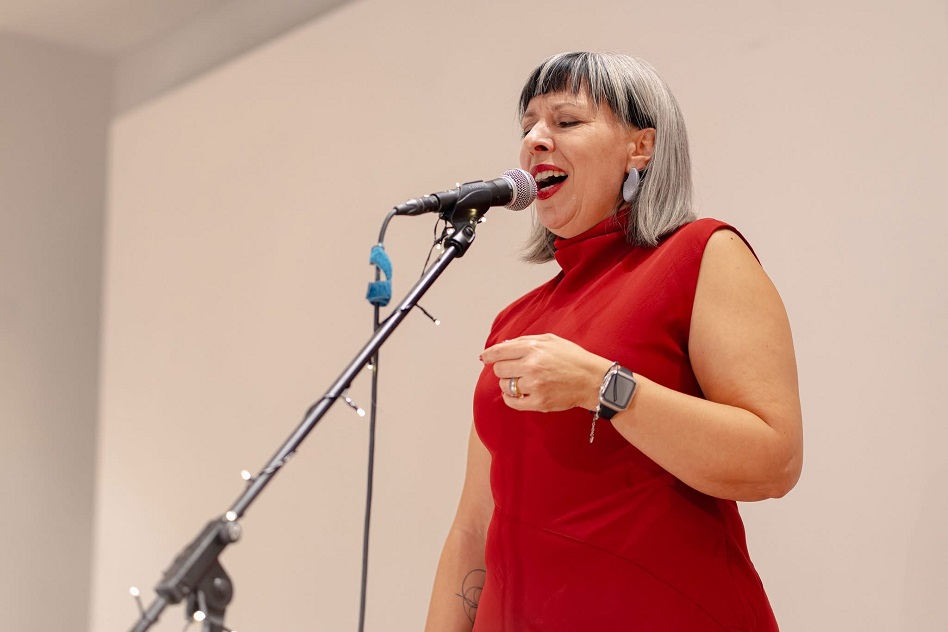
I met her again in December 2025, at Noël, the design gift fair in Bucharest. This time, her work was accompanied by something deeply personal: music. Fabiana herself sang jazz and Christmas songs, filling the space with emotion and warmth. It was a natural extension of her artistic world, where voice, form, and feeling coexist effortlessly.
What follows is a conversation about freedom, responsibility, creativity, and the invisible threads that connect jewelry, life, and the soul.
Fabiana Fusco
“Jewelry is a declaration of how I see the world”
Antoaneta: What does jewelry mean to you, beyond its function as an object?
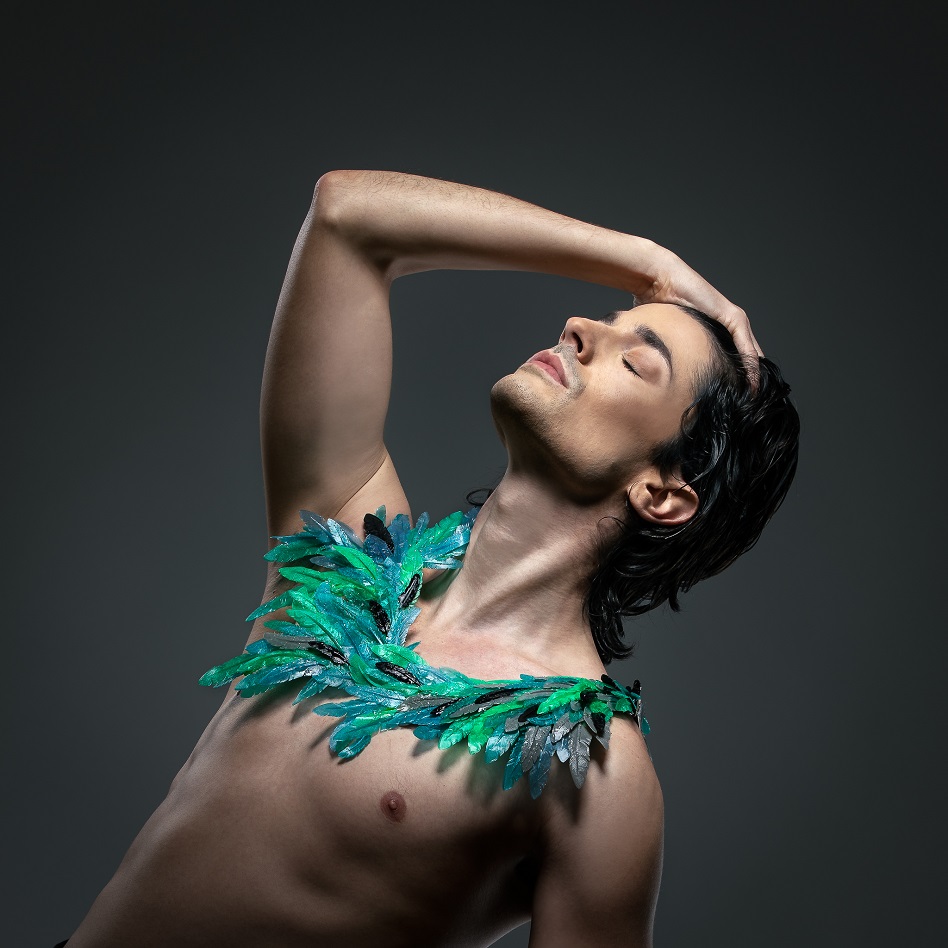
Fabiana: Jewels have important meaning not only for their emotional value but also because they bring stories and can become a form of declaration of your way of thinking, especially for what concerns contemporary jewelry. What I really hope when I create a collection or a piece is to lead the attention of the public to a specific topic that could be social issues, a denunciation of something that touches me in daily life and that can help people to think about it.
Antoaneta: What kind of jewelry did you gravitate toward before you became a jewelry designer?
Fabiana: Before I started to make my jewelry, I was fond of very minimal but statement pieces. A big geometric necklace, for example, with simple and clean lines, in silver or white gold. No stones for me, and to be honest, I don’t use semiprecious or precious stones in my jewelry too; it is something that I didn’t really need to express my creativity.
Antoaneta: What was your relationship with jewelry before you began creating it yourself?
Fabiana: Few pieces, big ones, earrings and a cuff or just a necklace, these are what I liked to wear. Then I started to make it by myself. In the beginning, it was a different piece for every day. Now I just wear a pair of earrings during the week and for a dinner out or special occasion, one or two of my favorite statement pieces of the last collection that I made.
Antoaneta: I know that in high school you wrote an essay about the most important jewelry makers between the two World Wars. Which of them left the strongest impression on you, and why?
Fabiana: For sure Cartier! I drew his brooches, rings, and necklaces of that period, and the Panthère jewels were my favorite. The fluid shapes, clean lines, and volumes, love it!
“Contemporary jewelry gave me freedom”
Antoaneta: Did your journey into jewelry begin with curiosity, with a desire to understand what happens “behind the scenes” of a piece?
Fabiana: Not exactly. I started to be interested in it because my History of Art professor at high school suggested the topic for the essay of the final exam to me, and in the same period, my father had as assistant the wife of a silversmith. To make my research, I went to their workshop and started to see how they work love at first sight, drawing, study, and at the end, they invited me to create something. No way to leave the bench anymore after that!
Antoaneta: Why did you choose jewelry as your language of expression and why contemporary jewelry?
Fabiana: It happened. I was always connected with art fields, fashion, graphic design, and somehow when I met this silversmith in Rome for my studies, I was so involved in the workshop activities that finally it seemed to be the right place for me. After more or less eighteen years of work, during which I always had the impression to consider jewelry as a form to express my feelings and my thoughts as a painter or a sculptor did, I found that probably contemporary jewelry was the right label to stay under to feel free to experiment and to make “strange things,” as people usually said when they saw my pieces in the past years.
Antoaneta: What does contemporary jewelry mean to you?
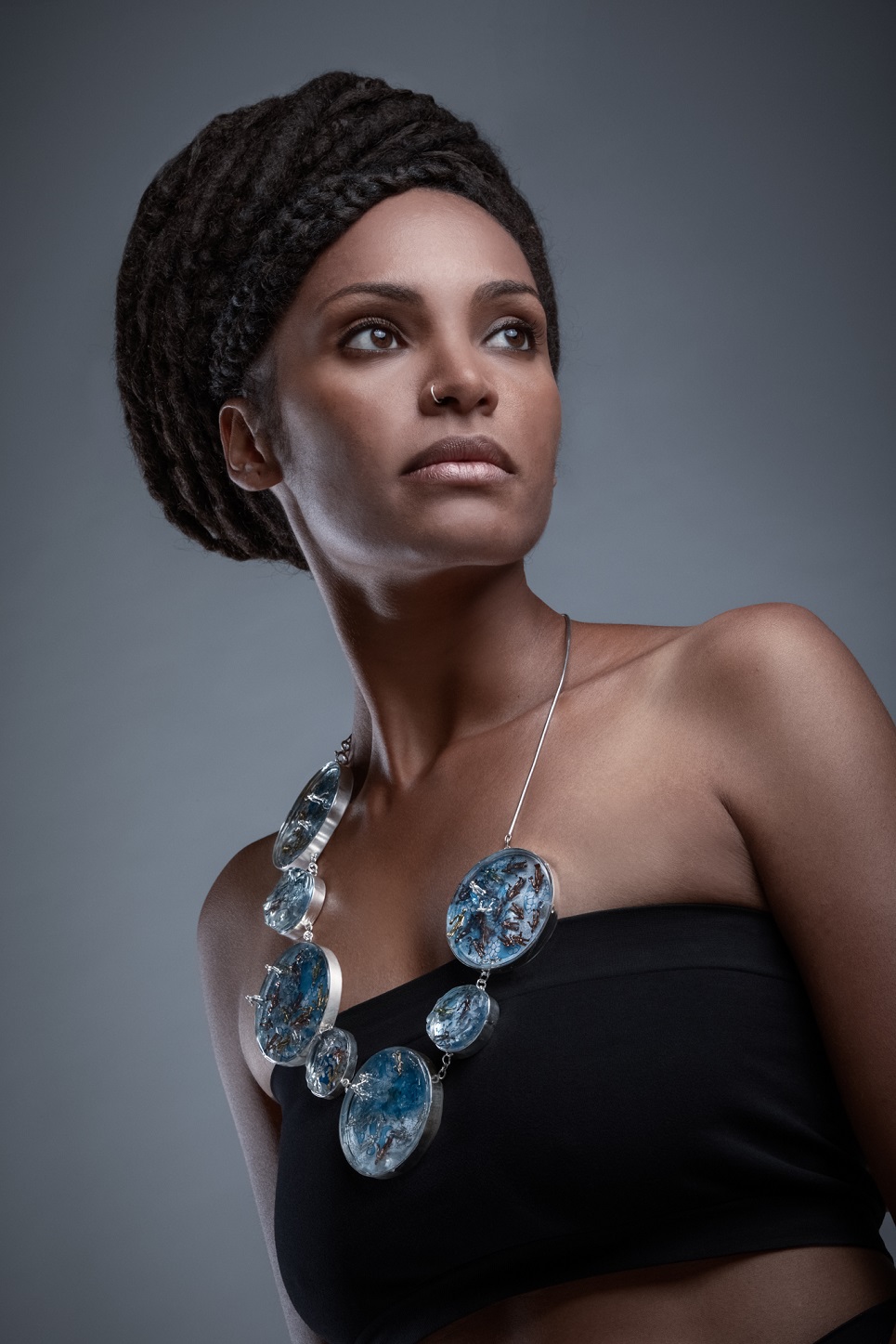
Fabiana: It’s freedom! Freedom to express my way of thinking, to let people pay attention to things that probably they don’t consider in normal life, to make my duty, to denounce. Probably it’s just a drop, but I think that everyone has to do something to sensitize public opinion.
Antoaneta: Contemporary jewelry is often associated with great freedom, especially in terms of materials. Do you feel that the concept is sometimes stretched to make space for artisans, those who work by hand, using materials such as textiles, paper, shells, or crocheted wire?
Fabiana: Probably sometimes there are misunderstandings, and there are artisans that take this label just to have an advantage of it. It depends on the galleries and on those who organize the related events to make the right selection.
“A piece must have a story”
Antoaneta: Eccentric, exaggerated, shocking: many pieces are described this way. Do these words truly define contemporary jewelry today?
Fabiana: In most of the cases. Honestly, I love to make big pieces, but this is the artisan that is in me; I try to do my best to make jewelry that can be really wearable.
Antoaneta: What does a piece need in order to truly be considered contemporary jewelry? To be a statement? To be art? To also be wearable?
Fabiana: To have a meaning, a story behind it, to be a conversation piece, to be probably art but this is a personal judgment, to represent a research of new materials or a research itself somehow.
Antoaneta: How would you describe your own creations?
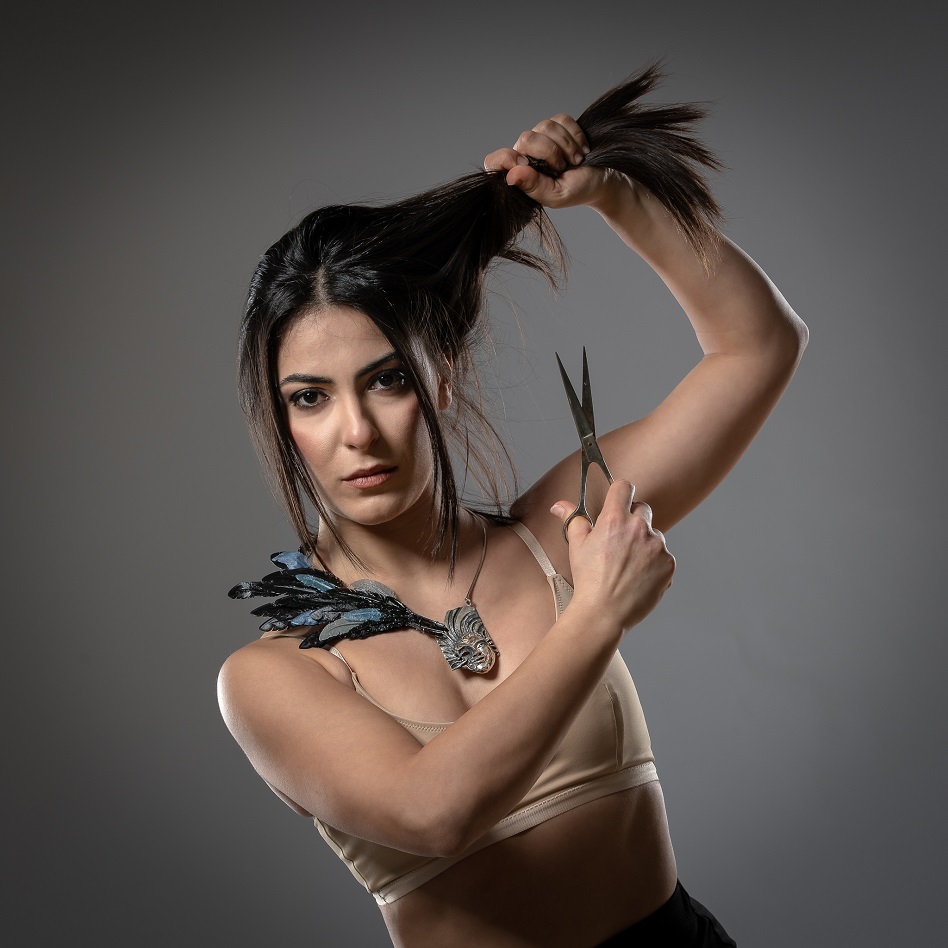
Fabiana: Usually a piece of my soul in which people can find something of themselves. Sometimes a way to scream my disapproval of what’s happening around me.
“Today my work speaks about social issues”
Antoaneta: Which techniques do you feel most connected to in your practice?
Fabiana: Lost wax is my favorite medium. Sculpting little figures gives me the most satisfaction.
Antoaneta: I understand you enjoy working with wax. What draws you to this medium?
Fabiana: Probably the feeling that I don’t have limits that instead I feel working on the bench.
Antoaneta: What themes run through your work? What concerns or inspires you most as an artist?
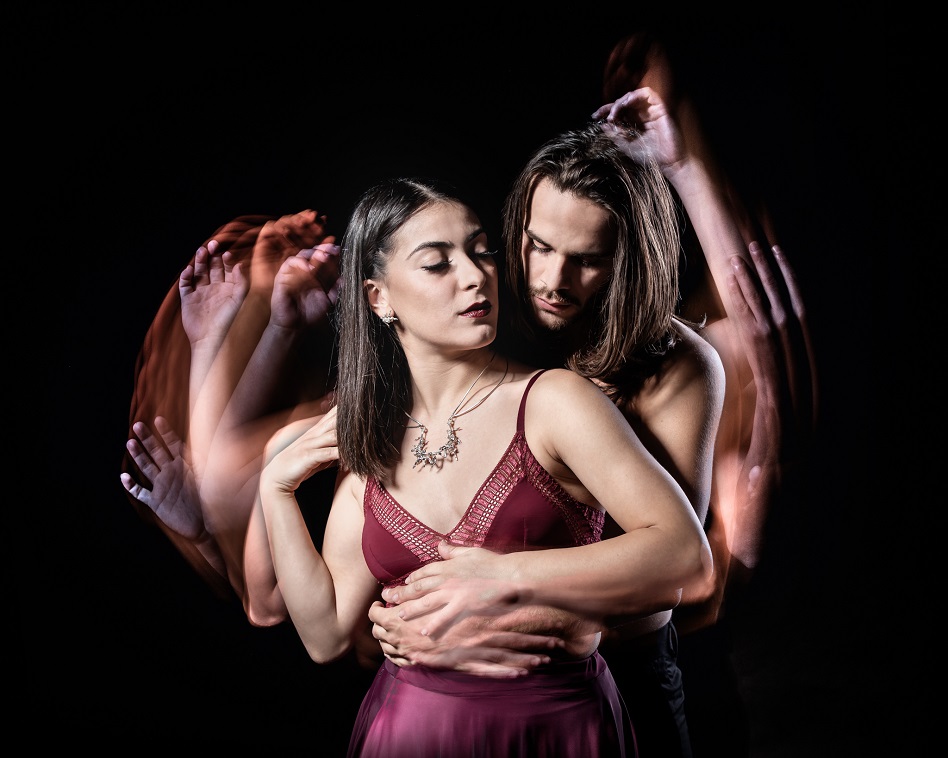
Fabiana: In the beginning, it was my passion for jazz music and for dance. Now I feel more involved in social issues and human problems or disease.
“ Romania is like home”
Antoaneta: How did you first discover Romania?
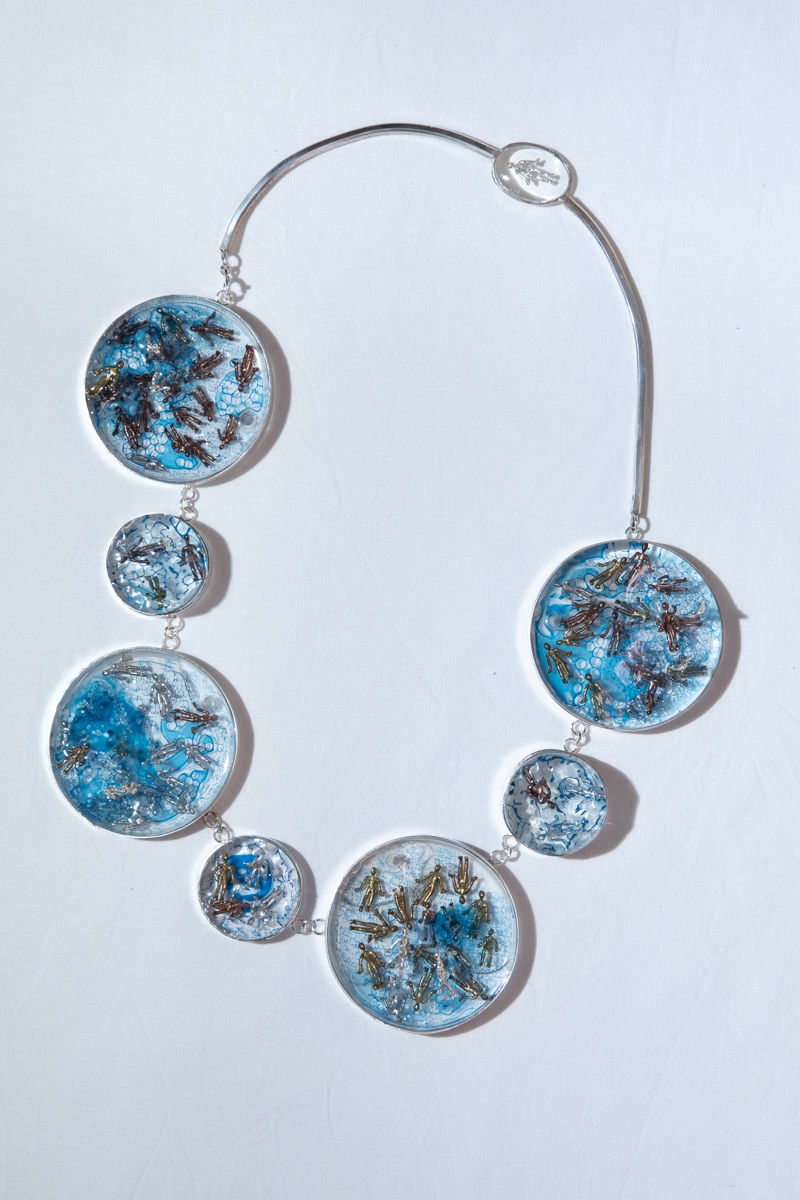
Fabiana: The first time that I was selected for an exhibition in Milan, I was presenting a necklace that was inspired by the migrants that cross the sea on boats to arrive in a new country to find a safe place to live or just better life conditions, and that necklace was the reason why I arrived after Milan in Bucharest, and that allowed me to enter the contemporary jewelry field where I was almost unknown. In Bucharest, I started to discover a community that shares knowledge, experiences without envy and selfishness, and from which I learned a lot and finally found “my place in the world.”
Antoaneta: Does Romania feel like a meaningful place for you to present your work, and why?
Fabiana: Romania is like home; it’s a place of beautiful memories to keep. I have a big family that welcomes me every time, and it’s the place where I meet, year by year, colleagues that now are more than friends. Every time I earn so much positive vibes, warm feelings, positive feedback, and appreciation for my work that push me to keep going.
Antoaneta: You’ve shown your jewelry around the world. How would you describe the interest in contemporary jewelry today?
Fabiana: Nowadays, more than in the past years, contemporary jewelry has more attention as a form of art from people, galleries, and collectors. At the same time, it is also a new way to create a fresh market for jewelry.
Antoaneta: How does the Italian audience compare with the Romanian one when it comes to contemporary jewelry?
Fabiana: Probably in Italy this form of art is more considered as a way to shake up a market that has been pretty stagnant for a long time because artisans didn’t want to upgrade their activities and were bound to an ancient way to lead their workshops. Instead, the interest and the appreciation for the artisan’s ability and for the research and the meaning behind every piece of jewelry is really impressive.
Antoaneta: Are fashion designers in Italy receptive to this kind of author jewelry? Do they welcome including contemporary jewelry in their collections or shows?
Fabiana: I don’t think so.
Antoaneta: What are you preparing to launch this year? Are you envisioning a particular line or collection?
Fabiana: Sure, I’m actually working on a new collection that speaks about the importance of the truth. The necessity to tell the truth, to listen carefully about what the news reports every day, to not turn our head on the other side so as not to face it.
“I am a creator, a mother, and someone who needs the sea”
Antoaneta: At Noël, the designer gift fair in Bucharest in 2025, you also sang for the audience, and it was a joy to listen to you. Do you have a special relationship with music, with jazz?
Fabiana: Jazz music led my first collection, and music was always inspiring some of my pieces. I danced since I was a child and till 6 years ago, it was a way to express my emotions and feelings till it didn’t work anymore, and I started to sing to find a new way to do it. Like dancing, it’s a sort of travel in yourself, a very deep one. Somehow this year I discovered that my voice touched people around me too, and it’s a great source of joy for me.
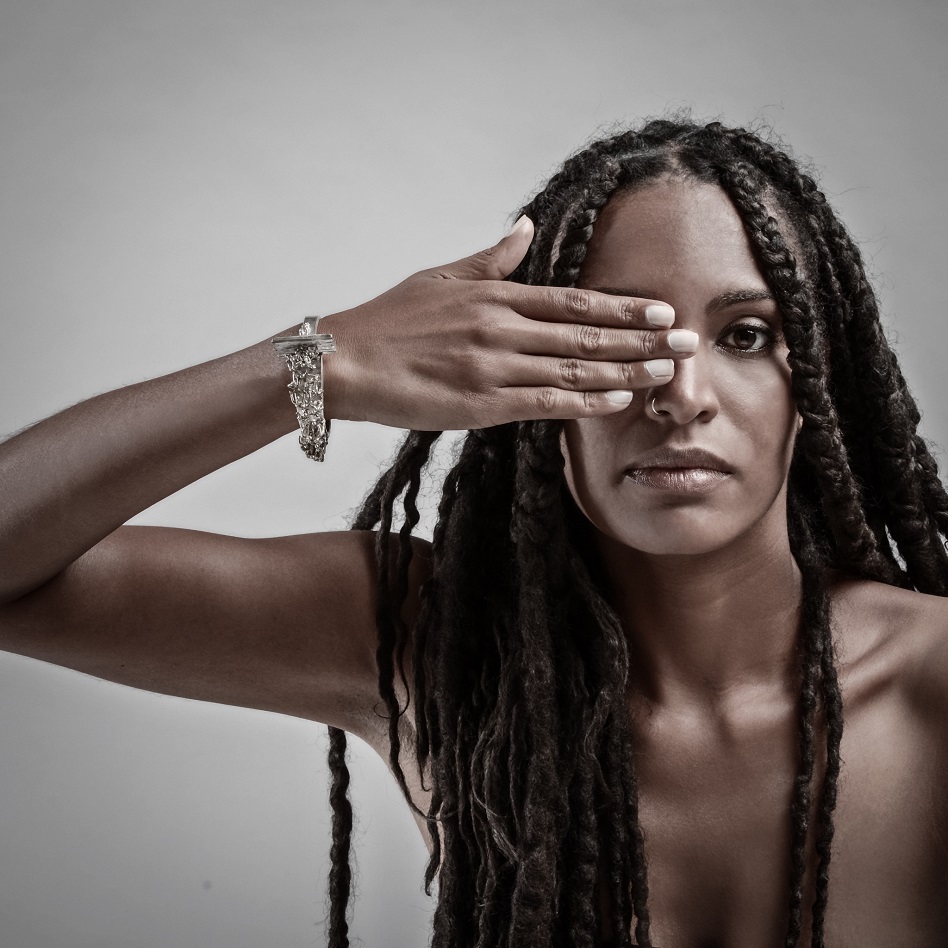
Antoaneta: Who is Fabiana Fusco when she steps away from jewelry? What food do you love? What perfume do you wear? What do you love most: the sea, the sun, winter, summer?
Fabiana: Fabiana is a 360 degree creative person and a mom. I love Italian dishes, but one of my favorite comfort foods is Japanese ramen soup. I used to wear a male perfume, but I like also to change it depending on the occasion. If I need to re-center myself, I love to go to the seaside, so I’m definitely a summer person. Spare time for me is a moment to recharge just make something different like crochet or sew, or making a walk in Rome or visit an art exhibition or a museum, go to the theater or to a concert.
Antoaneta: Of all the periods of art history you’ve studied, which one would you have most liked to live in?
Fabiana: I love the vibes of the Pop Art period; one of my favorite artists is Roy Lichtenstein. The freedom of the Sixties was amazing in every field.


Trebuie să fii autentificat pentru a publica un comentariu.